
5 lessons from the best charity content in 2025
Social media is louder than ever. Every day, charities are competing not just with other organisations — but with news, culture, entertainment, and people’s already stretched attention spans.
The best charity content in 2025 shares a common thread: it doesn’t shout louder. It connects deeper.
The content that cuts through doesn’t try to do more. It does things more intentionally.
Here are five quick wins to carry into your 2026 social media strategy, inspired by the charity content that’s working best right now.
Create intentional content
Great charity content doesn’t exist just to fill a slot in the calendar.
In a world of digital overwhelm, people are selective about what they engage with. Content that earns attention is content that makes people feel seen, sparks curiosity, creates emotion, or teaches them something useful.
Before posting, ask a simple question: what will someone get from this?
If the answer isn’t clear, it’s likely adding to the noise.
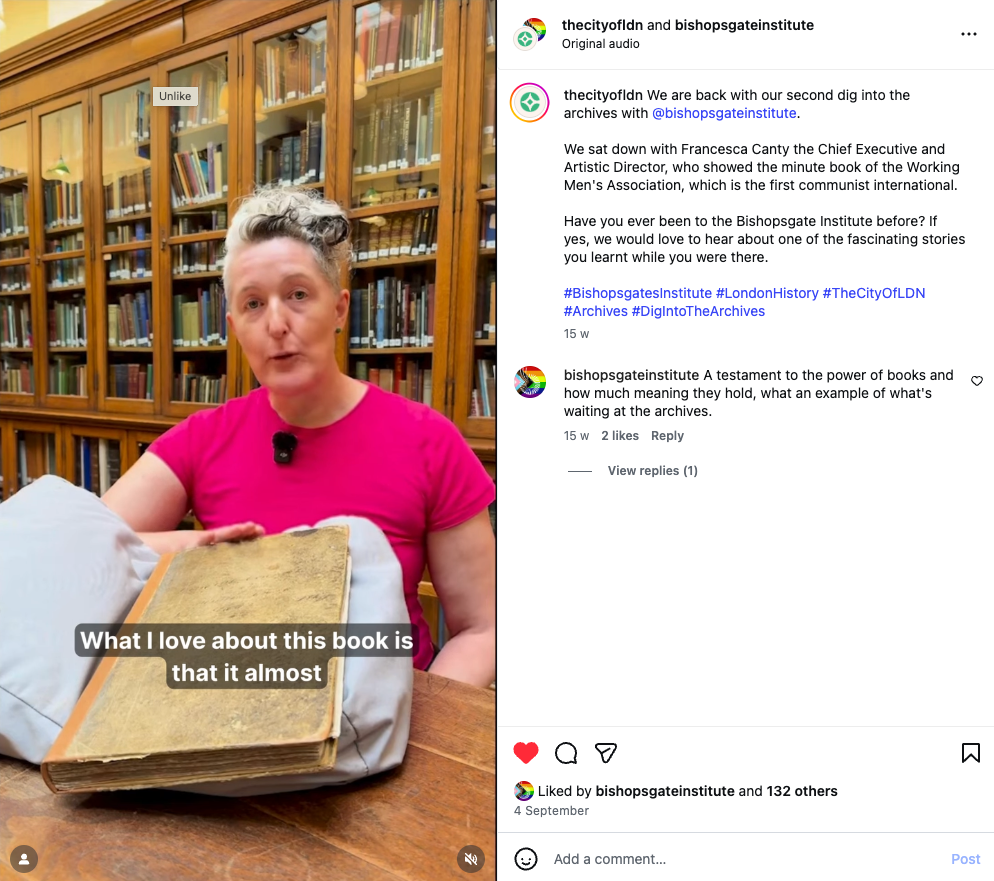
Content is often more effective when organisations resist the urge to say everything at once - as Bishopsgate’s video showed by giving people just enough to stop scrolling and want to see more. Sparking curiosity nicely here.
Make trends relevant
Trends can be powerful - but only when they mean something.
The strongest charity content doesn’t jump on trends for visibility alone. It uses them as a way to reinforce values, highlight impact, or connect back to the organisation’s purpose.
If a trend helps you say something meaningful about who you are and what you stand for, use it.
If not, it’s okay to sit it out.

The British Heart Foundation’s 2025 “Wrapped” shows how trends work best when they’re adapted, not adopted - using the Spotify format to spotlight impact, not chase attention.
Experiment
There’s no single formula for great content — and that’s a good thing.
Some of the most effective charity posts come from trying something slightly unexpected: a new format, a bolder message, or a different tone of voice. Not everything will land, but experimentation is how you learn what truly resonates.
Playing it safe rarely leads to standout results.

The Crab Museum is another great example of experimentation paying off - leaning into humour, personality and unexpected formats to build a deeply engaged community around a niche topic.
Be part of culture
Social media doesn’t exist in a vacuum.
Charities that perform well on social are tuned into what people are already talking about - whether that’s cultural moments, sector conversations, or shared emotional experiences — and they find thoughtful ways to join in.
Relevance matters. Authenticity matters more.
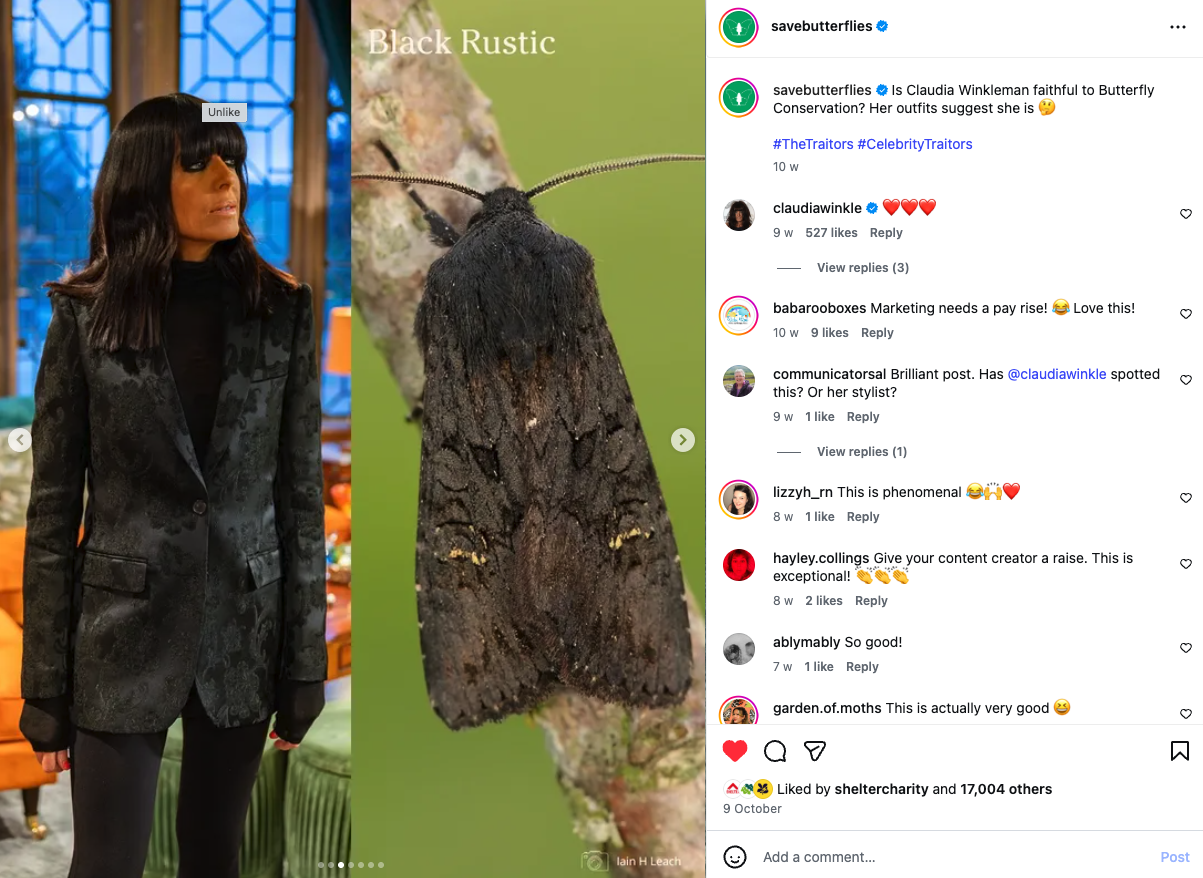
Being part of culture doesn’t always mean chasing trends. Posts like @savebutterflies’ inspired comparison of her now-iconic Traitors outfits work because they tap into shared humour and cultural moments people already care about.
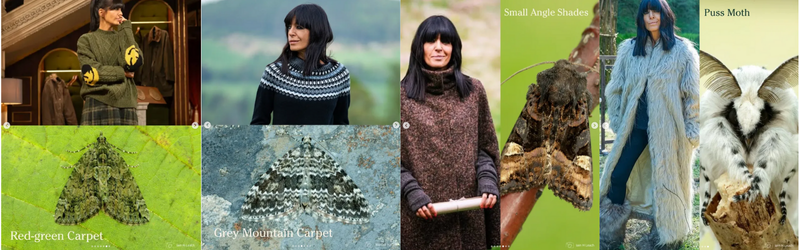
Genius.
RSPB does this well too - regularly using light-touch humour and timely references to place nature firmly within everyday conversations, rather than treating it as something separate or worthy.
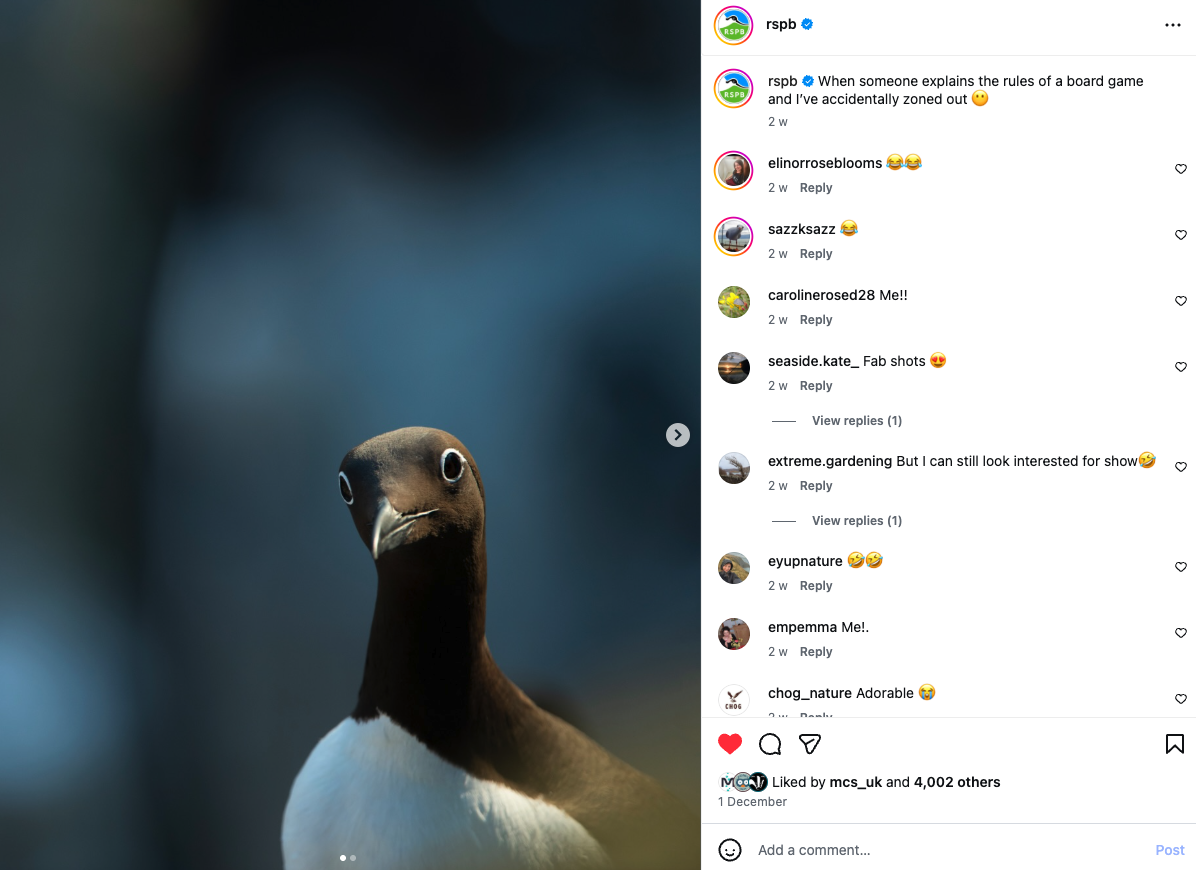
RSPB does this incredibly well too - regularly using light-touch humour and timely references to place nature firmly within everyday conversations, rather than treating it as something separate or worthy.
Invite easy participation
People want to engage - but they don’t always want to work hard to do it.
Low-bar interactions like polls, emoji reactions, or simple “this or that” questions make it easier for people to get involved. These small moments of participation help build familiarity, connection, and momentum over time.
Engagement doesn’t have to be complicated to be meaningful.

Greenpeace consistently demonstrates how powerful simple participation can be - using clear prompts and low-effort actions that remind people their involvement matters.
A final thought
There’s no single formula for “great” content. Social media isn’t an exact science.
But the charities creating work that cuts through in 2025 all share one mindset: they respect their audience’s time, attention and emotions.
In an overwhelmed digital world, that respect might be the most powerful strategy of all.