
Talk of Meta One has flooded our feeds since its announcement in September this year, and the new subscription service is prompting one of the biggest shakeups organic social media has seen in years.
So what do we know so far, and what does it mean for non-profits and purpose-driven organisations?
What do we know about it so far?
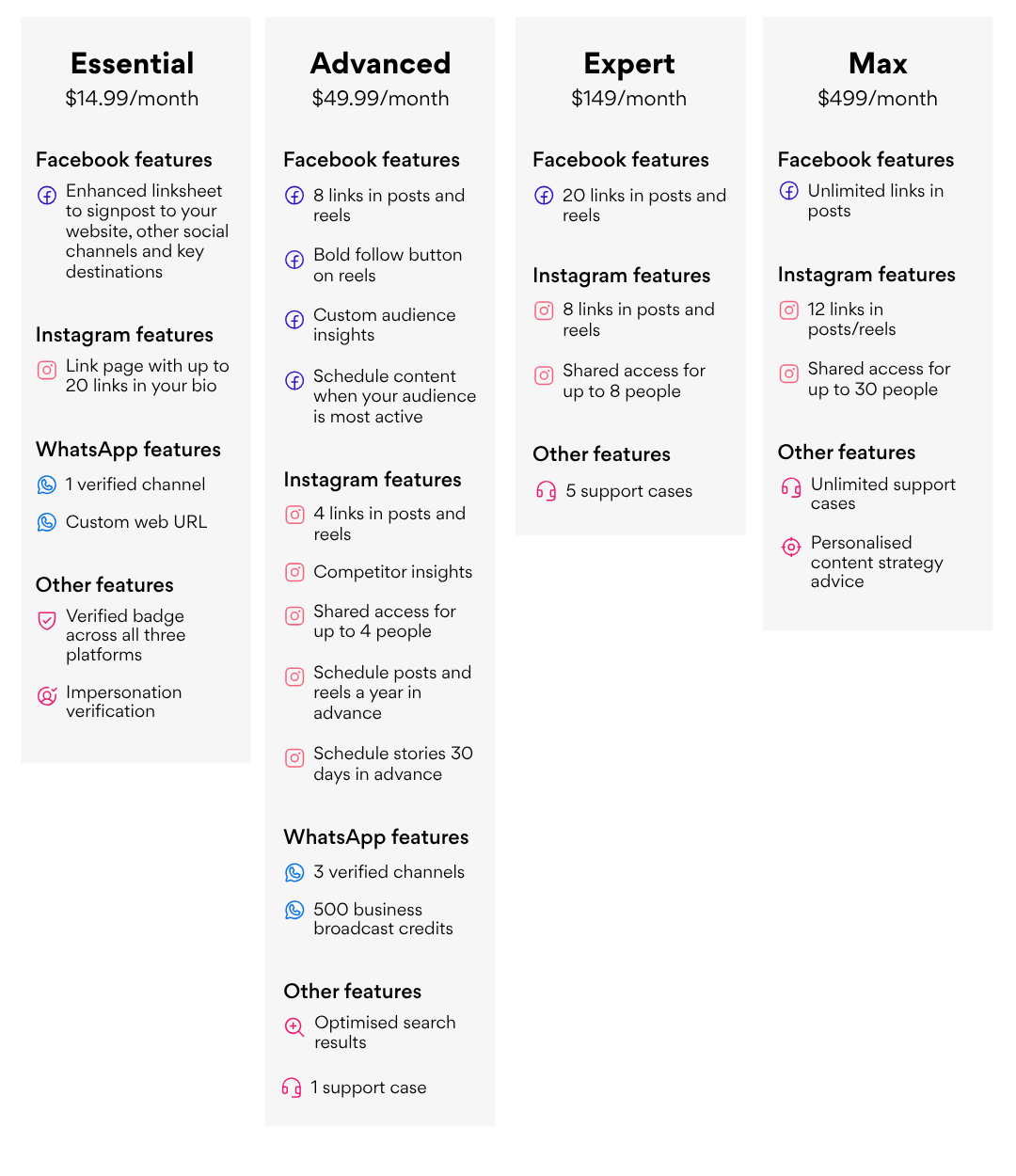
Meta’s press release describes Meta One as “a subscription service with more features and AI to create, connect and stand out”. It takes the Facebook, Instagram and WhatsApp Plus products and bundles them into one core subscription, plus extra features.
The main reason it’s been making so much noise, particularly in the non-profit sector, is the apparent restrictions being placed on adding links to Facebook content. This is still being rolled out, but it appears that eventually, non-Meta One users will be able to include links in 2 posts or comments per month.
That said, the lowest tier of the new subscription ($14.99/month) doesn’t offer users any additional links in posts, with the next tier ($49.99/month) allowing eight links on Facebook and four links on Instagram each month.
There are four subscription tiers, with a range of features across Facebook, Instagram and WhatsApp. Many of these features (e.g. competitor insights, advanced scheduling) appear to be an attempt by Meta to compete with social media management tools like Sprout, Buffer and Hootsuite, whilst others (e.g. links in organic Instagram posts and reels) are completely new, but seem to go against the platforms’ push for social-first content that keeps audiences scrolling.
What don’t we know yet?
As it’s still in the rollout stage, we don’t fully know the implications for those who choose not to pay for Meta One. For example, users can currently schedule Facebook and Instagram content up to 30 days in advance in Meta Business Suite for free.
We also don’t know if there will be any discounts, exclusions or other offers for registered non-profits or if link restrictions will apply to things like comments and Facebook groups.
Is it worth it?
We know that social media platforms across the board have been deprioritising link-based content, with a huge drive for social-first storytelling. One of the biggest shifts we’ve seen on social over the last 18 months is the desire for human comments, community and authenticity, rather than social being a place for hard asks and constant calls to action.
With that in mind, it could be argued that the ‘benefit’ of adding links to Instagram reels isn’t a benefit at all; it’s just going to make more and more content feel like ads. On a platform that hasn’t previously enabled links in posts, it’s asking for a huge shift in user behaviour to suddenly start clicking links on organic content.
Regardless of whether businesses sign up to Meta One or not, the value of organic social is in increasing awareness, building trust and credibility and nurturing relationships, especially for charities and non-profits.
That being said, if you are looking to pay for Meta One, the Advanced tier ($49.99) seems like the greatest value for money. The Essential tier doesn’t offer much that isn’t already available using other tools (e.g. using Linktr.ee to add multiple links to an Instagram bio), and the Expert tier only adds more link posts and increased support.
What do you need to do?
Review your current tools and requirements
If you’re considering subscribing, review your current social media strategy and look at the potential benefit of each feature. It’s also worth looking at any other tools you’re already using to see if you already have access to those features. For example:
Do you already have competitor insights and advanced scheduling through your social media management system?
Do you need to be able to schedule Instagram stories 30 days in advance?
Audit your Facebook link performance
If you're concerned about Facebook link limits, take a moment to do a mini audit and understand how essential link clicks are to your Facebook strategy. Look at your content and website analytics and ask:
How many posts with links do you typically share per month?
How many website visits are coming from organic content per month, on average?
On average, how many link clicks do your posts generate? (Calculate this by dividing the total link clicks within a time frame by the total number of posts that include links.)
Continue to focus on social-first storytelling
The launch of Meta One is just one part of the shift away from ‘free’ and organic social media as a driver of website traffic. Users (and algorithms) want information in the feed; they don’t want to have to leave the app or click multiple times to ‘learn more’. Instead of relying on links to disseminate information, turn your website content into social-first posts that are accessible, eye-catching and easy to digest.
If you’re looking for ways to adapt your long-form content for social, watch our Social Snapshots webinar, The Power of Content Repurposing.
